
The Inner and Outer Work of Citizenship
Updated: May 19
by Richard McKnight, PhD
Citizenship is often treated as something external: a legal status, a set of rights, a periodic obligation to vote. But that definition is far too thin to sustain a democracy—especially one under strain.
Citizenship is both inner and outer work. The outer work is visible: voting, organizing, serving, showing up. The inner work is quieter but just as essential: making a decision about our relationship to America and the role we play within it.
To make sense of that inner work, it helps to name three different ways people relate to power and to their country: Subject, Consumer, and Citizen. This is a formulation created by Jon Alexender in his fine book, Citizens.
The Inner Work: Who Am I in Relation to Power?
A Subject experiences government as something done to them. Subjects may comply, resent, or fear authority, but they do not expect to influence it. When people feel chronically unheard or powerless, slipping into subject mode can feel like self-protection. Many Americans believe this is what Donald Trump wants from us.
A Consumer relates to politics the way we relate to products and services. Politics becomes something to evaluate, complain about, or boycott. We ask, What am I getting? Am I satisfied? When dissatisfaction grows, consumers disengage—or become whiny, demanding, and ineffectual. Today’s political culture trains us into this role, when it rewards commentary over commitment and reaction over responsibility.
A Citizen, by contrast, understands that each of us is responsible for sustaining our democracy. Citizenship begins with an inner shift: This imperfect country is still mine—and my participation matters.
Subjects withdraw because participation feels futile. Consumers disengage when politics no longer delivers satisfaction. Citizens persist—not because it is easy, but because they understand that democracy weakens without their presence.
For many Americans—especially those in the Exhausted Majority—the inner bond of citizenship has frayed. People feel worn down, alienated, cynical. The inner work of citizenship starts by noticing whether we are relating to America primarily as subjects, consumers, or citizens—and deciding whether that role still serves us or our democracy.
The Outer Work: Acting Like Citizens, Not Spectators
If the inner work answers who I am, the outer work answers what I do.
Citizenship is not a feeling; it is a practice. Democracies do not survive because people hold the right opinions. They survive because enough people consistently show up.
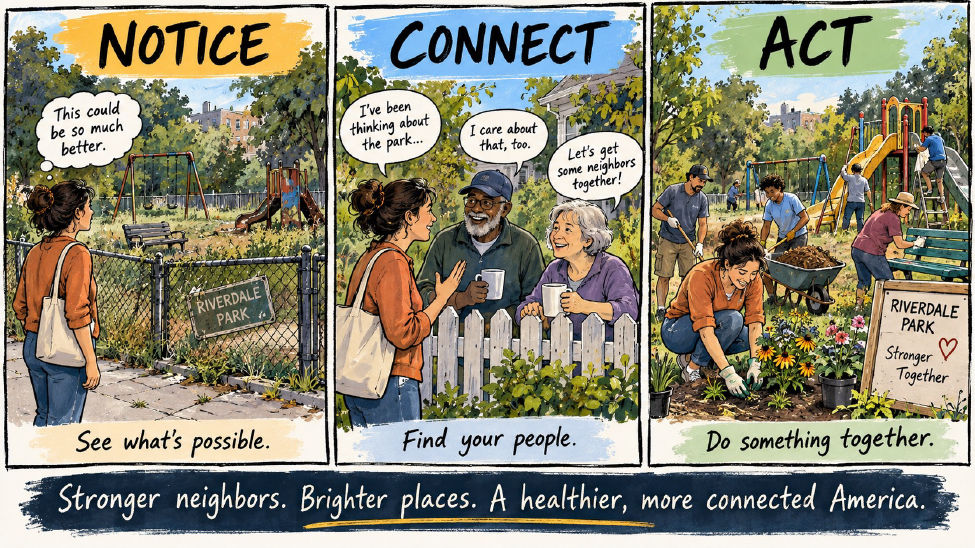
The outer work of citizenship includes voting, but it extends far beyond Election Day. It entails things like attending local town council meetings, serving on boards, volunteering, supporting community organizations, having difficult conversations, and resisting the pull to retreat entirely into private life.
When citizens disengage, power does not disappear—it concentrates. When citizens act, even modestly, they interrupt the dynamics that allow organized minorities to dominate institutions.
In a time of anger, nationalism, and democratic strain, it is tempting to wait for better leaders, more appealing political messages, or changes in laws. Those matter. But they will not be enough without citizens willing to do the quieter work of reclaiming their role.
Citizenship is ultimately an act of faith—not in perfection, but in possibility. It is the belief that self-government remains possible because ordinary people are still willing to practice it.
America’s future will not be decided only by courts, elections, or movements. It will be shaped by how many people choose to stop living as subjects, resist being reduced to consumers, and step—again and again—into the demanding, imperfect, necessary role of citizen.
Democracy doesn’t ask us to be perfect. It asks us to be present.
These ideas were drawn from the book When We The People Lead, The Leaders Will Follow by Richard McKnight, PhD. You can get the book at www.lightmanyfires.org.
This blog is based on the book by Richard McKnight, PhD called When We The People Lead, The Leaders Will Follow. Hear an audio summary of the book (scroll down): https://www.lightmanyfires.org/about-the-book

Comments