
“I try to stay out of politics.”

A NEW FRIEND, GLYNN BOLTMAN, recently shared a podcast she created about young voters. In it, she reflects on what she learned while interviewing young people across America’s heartland. She conducted interviews in three swing states. Hoping to better understand why so many young Americans feel politically disengaged, she spoke with people in fast-food restaurants, gas stations, and coffee shops. (Listen to Glynn's beautifully produced podcast here.)
Many of the people she interviewed said the same thing: “I try to stay out of politics.” I came away thinking, Good luck!
For forty years, I was an organizational psychologist endeavoring to help people learn to be productive in business and nonprofit settings. Organizational politics came up in nearly every conversation, mostly as a complaint about others. “I hate politics” was a common refrain. “I don’t play politics,” was another.
I recognize that organizational politics is not the same as, well, political politics. But here’s are some truths: Everyone is political. Politics is the pursuit of self-interest. And, like it or not, you cannot NOT be political.
Let me explain.
At work, if you ask your boss for a raise, you are pursuing self-interest. So, too, if you polish a presentation because you think it will make a better impact for your project. And if you employ empathy when you negotiate—considered an essential by most negotiation experts—you are doing so by being empathic.
Politics, by definition, is the accumulation of power to get things done.
If you accept this, you face a choice: how to proceed.
Will you accumulate power in a self-dealing, relationship-destroying way or in a way that is fair, honest, and has some likelihood of building a key relationship? The goal of my teaching was this: Being political in a relationship-building way is the best way to go: For those key relationships and for your soul.
Now, let’s go back to partisan politics. Most of us dislike politics because many people, especially politicians, pursue their own interests, not ours. But, young or old, we back away from politics at a personal and collective cost.
Glynn found that a lot of young people don’t want anything to do with politics. But guess what: Politics wants a lot to do with them.
Here’s what I mean: When young people back away from politics, they do not escape it.
When people back away because they find politics distasteful, inauthentic, and rancorous, they are less likely to vote or stand up for what they believe in. This turns mild aversion into political disadvantage because when you don’t stand up and don't vote, a lot of people who want things you don’t like do stand up and do vote.
Young people are disproportionately impacted by housing availability and costs, student debt, childcare, wages, and climate concerns. When your response to the politics that surround these issues is “I try to stay out of politics,” you’re going to regret it.
I’m wondering if what Glynn found was not apathy so much as discouragement. Many of the young people she met did not seem unreachable or uncaring. Rather, they seemed uncertain that politics had much to do with the struggles immediately in front of them or that their participation would make much difference.
That perceived lack of agency may be one of the central challenges facing our country today: helping younger Americans recover some sense that public life still belongs to them and that their voice still matters. Thank you, Glynn, for shedding your light on this.
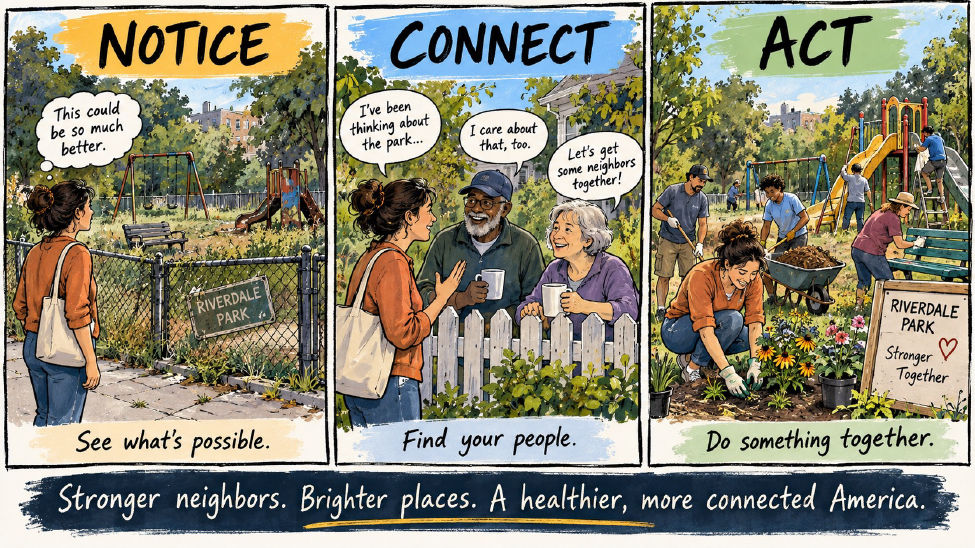
In my book, I devote an entire chapter to young voters and the choices they face. They have unique perspectives and concerns, but like all of us, one choice they face is whether they will be Subjects of our government, or Consumers of our government, or be Citizens, i.e., co-creators of our government.

Comments