
The Answer to What can I do? Starts With Believing Your Heart

THE QUESTION I HEAR MOST OFTEN as I talk about the themes in my book is What can I do?
It’s a sign that I’m getting through—the listener understands the difficulties our country faces and the need for everyone to get involved in addressing them.
It’s a hard question for me to answer for someone else, not because possibilities for action don’t come to mind, but because the question means different things to different people.
For one person, the question might reveal a sense of overwhelm: Where do I start? The problems are so many.
For others, the question reveals a concern about agency: I am just one little person. I have no power.
But what troubles me most is what I infer from younger people when they ask the question: I can’t do anything. It’s foolish to even try. The system is broken, corrupt, and beyond repair.
This is cynicism, which, in the context of American life, is the belief that:
Most people are selfish.
American institutions are irredeemably corrupt.
Any effort to create change is doomed to fail.
Of course, it’s not just young people who feel this way; a lot of us do.
Because I hear expressions of cynicism every day, I decided to try to understand it more deeply. My reflections have led me to think of cynicism the same way I think of anger:
Cynicism is a protective posture.
We all know the hazards of acting on anger. But we also need to understand how corrosive and disempowering cynicism can be. While cynicism can give the impression of sophistication, realism, and intelligence, it is none of those things.
Considering all of this, when the question What can I do? comes up now, I first take a philosophical tack.
My answer begins with this:
Start with believing your heart. Listen to what your heart is telling you when you ask What can I do? Try to get behind or underneath the question and find out where it’s coming from.
Let me explain by telling you a story about listening to my own heart.
A few months ago, I made a new friend, Rev. Tamie. She is the minister of a church in my area. She invited me to talk about my book to her church’s leadership council. She started the meeting with a wonderful old John Wesley question that each of us answered: “How is it with your soul?”
Not sure why, I asked if I could go first.
The second I began to speak, I teared up. I was completely surprised by my emotionality. The words would not come out. So, I paused and tuned into my heart.
Through tears, I found the words: “I am in a profound state of grief for my country.”
I spoke about the loneliness so many people in our country say they feel, the high rates of suicide, the sky-high stress levels people report, the corruption, the graft. I spoke about political extremism and the young people who have disengaged. I looked around the room and saw a lot of heads nodding.
Later, Rev. Tamie and I spoke about the power of naming what we feel. Anger and cynicism may be what we display to the world, but these often conceal something far more tender: vulnerability: fear, loss, grief. To name only the anger is to stop the journey before reaching the heart.
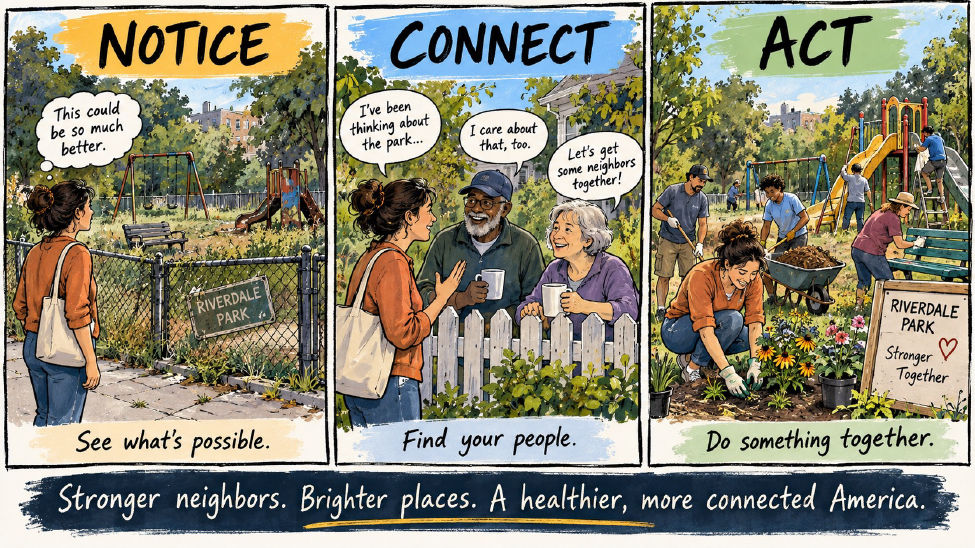
I conclude my book with a chapter called “Light Many Fires.” The whole book, but especially this chapter, is an invitation to enrich your life and restore the conditions democracy requires by joining with others to improve a neighborhood, a community, and/or our nation. The chapter gives lots of examples. In any future rewrite, I will add something to this chapter:
Choosing an action wisely begins with naming your feelings, with believing your heart.
Of course, I am saying nothing new. Shakespeare long ago said, “Go to your bosom; Knock there, and ask your heart what it doth know.”
What you can do might be as simple as joining a club or as complicated as starting a community garden or a political movement. As you do these things, you begin to change and our country begins to change, too. And you will be less cynical, less angry, less alone.
What are you learning when you listen to your heart these days?

Comments