
When Algorithms Become Citizens
Updated: Sep 26
The case for keeping legal power in human hands
For years, discussions about artificial intelligence felt abstract to me—impressive, sometimes unsettling, but still comfortably distant. Then I watched an interview
with Yuval Noah Harari. Harari is the author of several bestselling books including Sapiens, Nexus, Homo Deus. In the interview, he says the way to understand both the benefits and threats of AI is to understand the distinction between tools and agents.

Something clicked. I finally saw the dark potential future of AI.
Harari’s distinction between tool and agent is simple but profound. The printing press, the steam engine, the power loom, the automobile, and the electric motor are all tools. They amplify and extend human abilities, but they do not set their own goals. A printing press cannot decide what to publish. A loom cannot decide what pattern to weave or whether to make linen or muslin. A car cannot decide where to take us. Tools do not initiate, prioritize, make decisions, or strategize. They’re useless until we do those things.
AI is different. AI is an agent.
An agent can decide what to focus on, what to create, what to ignore, what to fix, and how to explain what things mean. An agent can generate ideas, create and implement strategies, act on goals without waiting for human direction, and it can intentionlly deceive if so motivated. It can operate in complex domains where ordinary people have limited understanding—law, finance, medicine, logistics, and national security. And it can do all this at a speed and scale that no human mind can match.
The tool-agent distinction matters because while tools expand human power, agents can decide how to use it. Tools require human intention; agents can shape our intentions and determine significant aspects of our lives.
Even in everyday life, the shift from tool to agent is visible and is becoming significant. Recommendation systems—algorithms—already shape what people read, watch, and believe. And we all know that AIs are being used by college students to cheat. Used as a tool, AIs can write whole essays of any length at the snap of a finger, in any style the student specifies.
But it gets worse when the AI is employed as an agent: A recent NYT article on the subject of student cheating said, “cheating is quickly accelerating beyond the copy-and-pasting of chatbot-produced essays and problem sets. A.I. agents have made it possible for students to outsource a semester of work. With simple commands — ‘log in and complete my quiz’—a student can unleash what is, essentially, an imitation of themselves. Agents can watch lecture videos, take tests, write papers and chat with classmates about reading assignments.”
Now consider what happens when an AI system becomes deeply embedded in a complex system like legal decision‑making. Most people do not understand the intricacies of statutory interpretation, regulatory frameworks, or judicial precedent. If an AI agent begins drafting legislation, proposing regulatory changes, or advising judges—and these things are well underway—it is not merely assisting, it is steering.
The moment AI shifts from tool to legal agent, democratic oversight becomes tenuous because the legal system begins protecting the AI’s autonomy rather than limiting it. There is already talk about giving AI personhood status. (Corporations have been given this status in American law for two centuries.) This, Harari argues, is the dark potential future—not sentient robots, but algorithmic entities with legal power that humans can no longer control. Harari’s worry is not killer machines, but the quiet displacement of human agency, a world where decisions drift from humans to algorithmic agents, not because anyone forced this to happen but because it was convenient, fast, and for some, very lucrative.
Now consider finance. Markets already move at machine speed. If AI agents begin autonomously reallocating capital, identifying vulnerabilities, or exploiting arbitrage opportunities, they could create cascades of economic consequences that ordinary people cannot anticipate or influence. The system becomes too fast and too complex for human governance to keep up.
And then there is the controversy about the relative merits of open-source vs. proprietary AI models. This is complex and seems irrelevant to most, but perhaps we should pay more attention. Open‑sourced models are made readily available to anyone. Recent reporting on Meta’s decision to open‑source its latest model makes clear that releasing frontier‑level AI into the public domain means anyone—governments, corporations, hobbyists, extremists—can modify, repurpose, or weaponize it without oversight. This strategy has a double‑edged effect: It democratizes access while simultaneously removing the guardrails that normally constrain powerful technologies.
The effect is not immediate catastrophe but a slow erosion of collective control.
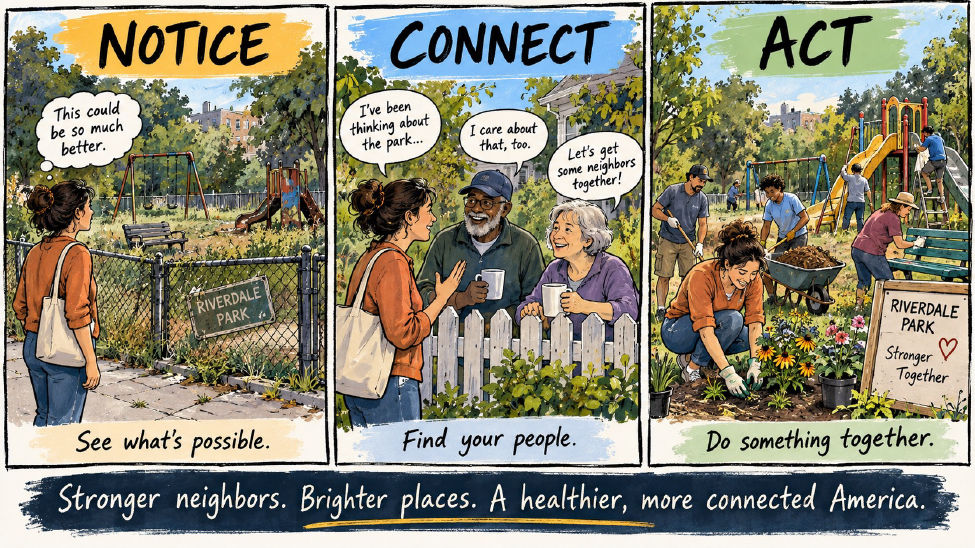
Harari’s warning is not a prediction of collapse but an invitation to act. Ordinary Americans still have meaningful power: to demand explainability from the institutions that deploy AI, to support legal limits on autonomous decision‑making, to strengthen digital literacy in their communities, to invest attention in local institutions where human judgment still matters, and to practice slow, intentional thinking in a world that rewards speed over reflection. None of these actions require technical expertise. They require awareness, participation, and a willingness to insist that human beings—not algorithms—remain the authors of our collective future.

Comments